Category: Nutrition

What the body needs

  • Supplements for Perimenopausal Runners: What’s Worth It and What’s Hype

    Supplements for Perimenopausal Runners: What’s Worth It and What’s Hype

    The hormone fluctuations of perimenopause can affect recovery, bone health, sleep, energy, and muscle mass — all things that are important for runners. The supplement industry targets women aggressively in this phase of life, and it can be difficult to know what works and what doesn’t. Here’s a quick rundown of what’s worth spending your money on and what you can skip.

    Supplements with Strong Evidence of Helping Perimenopausal Runners

    Creatine

    Creatine has been widely studied and evidence shows it can preserve muscle mass, bone health, and cognitive function in perimenopausal women. The recommended dose is 3–5 g of creatine monohydrate daily. It works best when paired with weight-bearing or resistance training.

    woman in sportswear drinking water from bottle

    Iron

    Fluctuating hormones can cause heavy menstrual bleeding, which can lead to iron loss and anemia. Decreasing estrogen can also cause inflammation leading to decreased iron absorption. Symptoms of low iron include fatigue, brain fog, and trouble sleeping — which can all affect your running ability. Iron is best absorbed on an empty stomach and taken with vitamin C (like a glass of orange juice) and shouldn’t be taken with calcium or dairy. Ask your doctor for blood tests to find out if your iron is low before starting iron supplements — not everyone needs them!

    Woman doing bicep curls with dumbbells in a gym

    Calcium + Vitamin D

    Calcium is crucial for bone health, and vitamin D is the key to absorption, so they are best when taken together. Dietary sources are best, so focus on dairy, beans, dark leafy veggies, and fatty fish. Vitamin D is also obtained through sun exposure! If you have concerns about not getting enough through diet alone, talk with your doctor or nutritionist to find out if adding a supplement might help you.

    Bottle of Nature's Blend Calcium & Vitamin D3 softgel capsules

    Magnesium Glycinate

    Studies show that magnesium glycinate can be extremely beneficial in perimenopause. It provides relief from common symptoms like anxiety, insomnia, and muscle cramps (all of which negatively affect running). It is also one of the most easily absorbed forms of magnesium and gentle on the stomach. Starting dose is 100–200 mg daily, and taking it at bedtime maximizes its benefits.

    Woman sitting comfortably in a chair holding a cup, with magnesium supplement bottle on a wooden side table.

    Omega-3’s

    Omega-3 fatty acids decrease inflammation, support bone and joint health, lower cardiovascular risks, and promote lean muscle. They are also linked to better sleep quality.

    pexels-photo-16776311.jpeg

    Protein

    Protein provides muscles the essential building blocks needed to recover after a run. Protein from food is best, but a supplement (like a shake or a bar) is an easy way to make sure the body gets what it needs if you are struggling to get enough protein in your diet.

    Black container labeled whey protein powder chocolate fudge with a glass of chocolate shake and a scoop with powder

    Supplements that MAY Help Perimenopausal Runners

    Collagen Peptides

    Studies show that collagen peptides — especially when combined with calcium and vitamin D — show promise for improving bone and muscle health. They may also reduce joint stiffness in osteoarthritis.

    product shoot of collagen supplements on a yellow packet

    Ashwagandha

    In addition to lowering cortisol and easing common perimenopause symptoms like poor sleep, brain fog, anxiety, and hot flashes, Ashwagandha shows promise for athletic performance, including improved VO₂max, endurance, and recovery.

    Bundle of freshly harvested wild roots on wooden table with leaves and twine

    Maca Root

    Lab studies suggest maca may assist not only physically active people and athletes, but also women complaining of lack of energy and stamina during perimenopause. Unlike caffeine, maca offers a sustained energy boost without the crash and may boost endurance and improve recovery.

    Brown supplement bottle labeled Maca Root with 100 capsules inside

    Supplements with Little Evidence of Helping Perimenopausal Runners (Save Your Money!)

    Many supplements marketed toward middle-aged women claim to relieve the symptoms of perimenopause and some also claim to boost athletic performance. The following are common, but there is currently little to no evidence they are beneficial:

    Dong Quai

    Claims to reduce hot flashes, night sweats, menstrual cramps, PMS, and supports “hormonal balance”.

    Milk Thistle

    Claims to provide liver support, hormone detoxification, estrogen metabolism.

    Black Cohosh

    Claims to reduce hot flashes, night sweats, sleep disturbances, and mood changes.

    Evening Primrose

    Claims to reduce inflammation, hot flashes, breast tenderness, mood swings, skin health, and “provide hormonal balance”.

    Wild Yam

    Claims to be a natural progesterone precursor, providing “hormone balance” and bone health protection.

    Red Clover & Soy

    Claims to provide hot flash relief, bone density support, cardiovascular health, cholesterol improvement, and cognitive benefits.

    The Bottom Line

    Supplements won’t fix the transition, but the right ones can support you through it. Start simple, talk to your doctor, and tune out the noise from products promising hormonal miracles (save that money for your shoes!).

    Note: While I am a nurse practitioner and a personal trainer, I am not your nurse practitioner or trainer. Always consult with your own medical provider regarding what is right for you.

    References

    Acharya Balkrishna, Ankita Kukreti, Nidhi Sharma, Deepika Srivastava, Vedpriya Arya,
    Efficacy and safety of Withania somnifera (Ashwagandha) in the management of menopausal symptoms, Pharmacological Research – Natural Products,Volume 10,2026,100478,ISSN 2950-1997

    Candow DG, Moriarty T. Effects of Creatine Monohydrate Supplementation on Muscle, Bone and Brain- Hope or Hype for Older Adults? Curr Osteoporos Rep. 2024 Nov 1;23(1):1. doi: 10.1007/s11914-024-00895-x. PMID: 39509039.

    Salamon, Maureen. 2024. “Menopause Supplements: Effective Relief or Empty Promises?” Harvard Health Publishing, September 1, 2024. https://www.health.harvard.edu/womens-health/menopause-supplements-effective-relief-or-empty-promises.

    Sims ST, Kerksick CM, Smith-Ryan AE, Janse de Jonge XAK, Hirsch KR, Arent SM, Hewlings SJ, Kleiner SM, Bustillo E, Tartar JL, Starratt VG, Kreider RB, Greenwalt C, Rentería LI, Ormsbee MJ, VanDusseldorp TA, Campbell BI, Kalman DS, Antonio J. International society of sports nutrition position stand: nutritional concerns of the female athlete. J Int Soc Sports Nutr. 2023 Dec;20(1):2204066. doi: 10.1080/15502783.2023.2204066. PMID: 37221858; PMCID: PMC10210857.

    Sun C, Yang A, Teng F and Xia Y (2025) Efficacy of collagen peptide supplementation on bone and muscle health: a meta-analysis. Front. Nutr. 12:1646090. doi: 10.3389/fnut.2025.1646090

    Ulloa Del Carpio N, Alvarado-Corella D, Quiñones-Laveriano DM, Araya-Sibaja A, Vega-Baudrit J, Monagas-Juan M, Navarro-Hoyos M, Villar-López M. Exploring the chemical and pharmacological variability of Lepidium meyenii: a comprehensive review of the effects of maca. Front Pharmacol. 2024 Feb 19;15:1360422. doi: 10.3389/fphar.2024.1360422. PMID: 38440178; PMCID: PMC10910417.

  • Protein Needs for Perimenopausal Runners: How Much, When, and What Else You Need

    Protein Needs for Perimenopausal Runners: How Much, When, and What Else You Need

    As women runners reach middle age and start to experience the hormonal shifts, muscle loss, and metabolic changes of perimenopause, good nutrition is not just important — it is critical. Protein is central to this, and recent trends — especially on social media — have highlighted its many benefits for the midlife female athlete. Protein works best, however, as part of a balanced athlete-centered diet — perimenopausal runners should make sure other important nutrients aren’t neglected. 

    HOW MUCH PROTEIN DO PERIMENOPAUSAL RUNNERS NEED?

    Perimenopause can have big effects on a runner’s body. Many women start to notice slower recovery, decreased muscle mass, and a slower metabolism. Fluctuating and decreasing estrogen levels also contribute to increased inflammation and changes in bone health. Prioritizing protein can help slow and possibly negate these changes. The general recommendation is for active women to get 1.6– 2.2g per kg of body weight (or approximately 1 gram per pound) daily. For a 145-pound runner, that’s roughly 105–145g of protein per day. During high training volume up to 2.4g per kg might even be considered. This increased amount versus the standard recommendation works to preserve and build lean muscle mass, supports fast post-run recovery, aids in collagen production to bolster bone and joint health, and provides amino acids that promote hormonal balance. 

    TIMING YOUR PROTEIN INTAKE: It Matters

    Research has shown that the timing of protein intake matters. The most critical time for consumption for female runners in perimenopause is 30-60 minutes post-run or post-workout. Having 25-40g within this window maximizes muscle repair and synthesis. Remaining protein should be spread across other meals during the day as evenly as possible. 

    CHOOSING SOURCES OF PROTEIN: The Best Protein Sources for Women Athletes Over 40

    The source of protein is important as well. The best sources are animal-based products such as chicken, salmon, cottage cheese, Greek yogurt, and eggs. These are typically highest in quality and completeness. The human body requires dietary intake of 9 essential amino acids that it cannot make itself. Animal proteins are “complete,” meaning they contain all 9 in optimal amounts. They are also easily digested and absorbed by the body, so less protein is wasted. If you follow a vegetarian or vegan diet, however, plant-based options such as lentils, legumes, edamame, tempeh, quinoa, and hemp seeds are also great options. 

    PROTEIN SUPPLEMENTS: Do You Really Need Them?

    If your daily meals aren’t consistently meeting your protein targets — even after prioritizing protein-rich foods — a quality supplement can help fill the gap. Whey protein is a particularly good option for perimenopausal women, as it’s rich in leucine (the amino acid most responsible for triggering muscle protein synthesis). Plant-based alternatives like pea protein are a solid choice if you’re dairy-free or simply prefer them. Both work well blended into a post-run smoothie or mixed with milk for a quick recovery drink. Protein bars can also be convenient on busy days, just check the label — look for at least 15–20 grams of protein and minimal added sugar.

    CARBS AND FATS FOR WOMEN RUNNERS OVER 40: They Just as Important as Protein!

    Protein is vital, but in your efforts to meet your daily requirements it shouldn’t be at the expense of foods that fuel and restore your body. Carbohydrates provide the primary energy source glycogen — the fuel your muscles store for running — and are non-negotiable for performance. Insufficient carbs can lead to thyroid dysfunction, elevated stress hormones, and of course, “hitting the wall” during prolonged exercise. Runners experiencing perimenopause should not limit carbs, but rather choose high quality carbs. Reach for whole grains like brown rice, starchy vegetables such as sweet potatoes, or fruit—especially antioxidant-rich berries. 

    Healthy fats also play an important dietary role in an athlete’s body. Omega-3 fatty acids support cognitive function, which can reduce the “brain fog” and memory issues common in perimenopause. They are also natural anti-inflammatories that can help soothe aching joints and may even ease hot flashes. Essential, fat-soluble vitamins (such as A, D, and E) need to be eaten with fat for your body to properly absorb them. Vitamin D is especially important for bone health as you age. The body also synthesizes hormones — including estrogen — from cholesterol which is derived from dietary fats. Good sources of healthy fats to incorporate into your meals include avocados, seeds, nuts, and olive oil.

    THE BOTTOM LINE

    Perimenopause is not the time to overcomplicate your nutrition — it’s the time to get intentional about it. Prioritize protein at every meal, fuel your runs with quality carbohydrates, and don’t fear healthy fats. Your body is working hard to adapt to significant hormonal changes, and the right nutrition is one of the most powerful tools you have to keep running strong, recovering well, and feeling your best through this transition and beyond.

    For More Information Check Out These Resources!

    High-protein foods: The best protein sources to include in a healthy diet from Harvard Health Publishing, Harvard Medical School

    Why Is America Fixated on Protein? Not all proteins are created equal from Johns Hopkins Bloomberg School of Public Health

    Note: While I am a nurse practitioner and a personal trainer, I am not your nurse practitioner or trainer. Always consult with your own medical provider regarding what is right for you.

    References

    Cruz-Jentoft AJ, Dawson Hughes B, Scott D, Sanders KM, Rizzoli R. Nutritional strategies for maintaining muscle mass and strength from middle age to later life: A narrative review. Maturitas. 2020 Feb;132:57-64. doi: 10.1016/j.maturitas.2019.11.007. Epub 2019 Nov 27. PMID: 31883664. 

    Martinez JA, Wertheim BC, Thomson CA, Bea JW, Wallace R, Allison M, Snetselaar L, Chen Z, Nassir R, Thompson PA. Physical Activity Modifies the Association between Dietary Protein and Lean Mass of Postmenopausal Women. J Acad Nutr Diet. 2017 Feb;117(2):192-203.e1. doi: 10.1016/j.jand.2016.10.009. Epub 2016 Nov 30. PMID: 27914915; PMCID: PMC5276713.

    Sims ST, Kerksick CM, Smith-Ryan AE, Janse de Jonge XAK, Hirsch KR, Arent SM, Hewlings SJ, Kleiner SM, Bustillo E, Tartar JL, Starratt VG, Kreider RB, Greenwalt C, Rentería LI, Ormsbee MJ, VanDusseldorp TA, Campbell BI, Kalman DS, Antonio J. International society of sports nutrition position stand: nutritional concerns of the female athlete. J Int Soc Sports Nutr. 2023 Dec;20(1):2204066. doi: 10.1080/15502783.2023.2204066. PMID: 37221858; PMCID: PMC10210857. 


  • Running in Perimenopause: Why It Feels Harder After 40 (And What’s Actually Happening)

    Running in Perimenopause: Why It Feels Harder After 40 (And What’s Actually Happening)

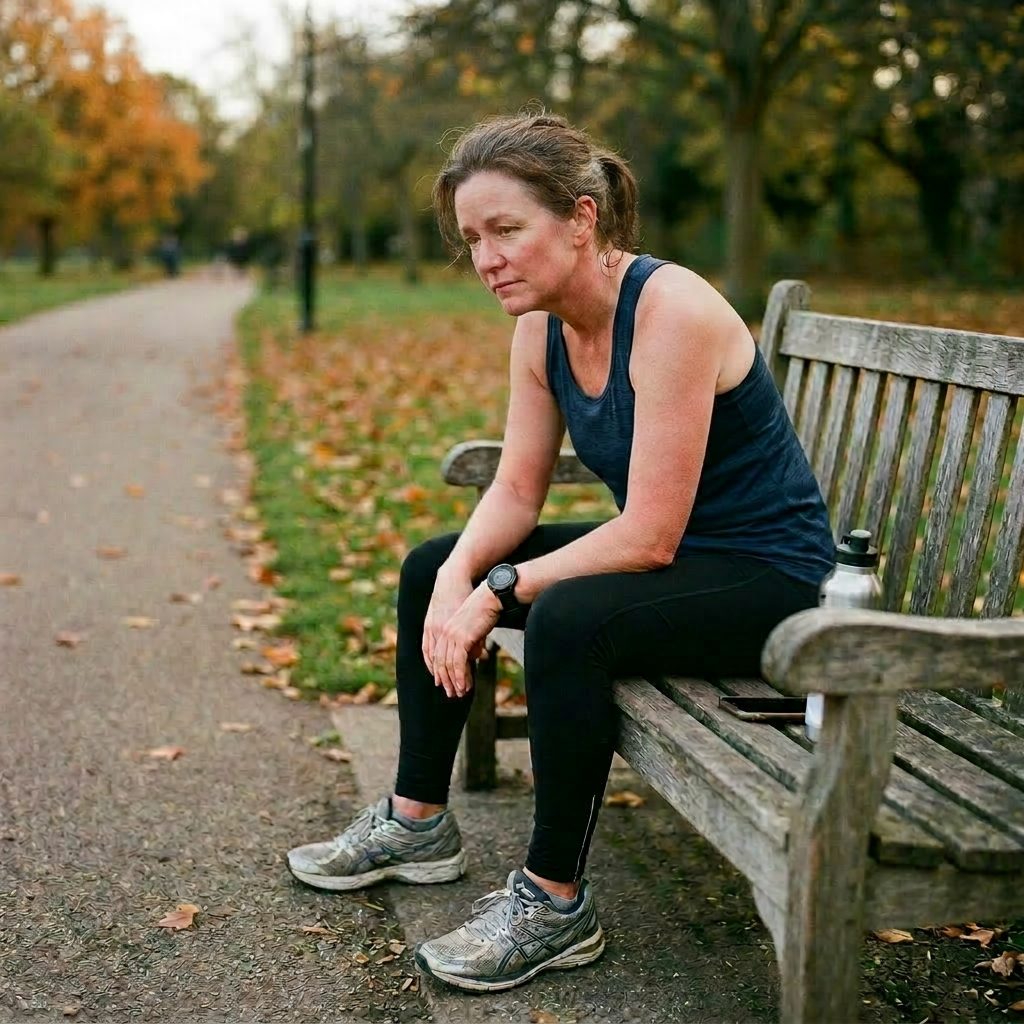
    The morning started out like many Saturdays. After an early wake-up and a carb-loaded breakfast, I collected gels and chews, made sure my headphones were charged, and headed out for my long run. At first nothing seemed unusual, although I could tell my legs and lungs needed to warm up before settling into a rhythm. But after the first mile or so I realized nothing was clicking. My breathing felt a half-step behind, like I couldn’t pull in enough air to match my pace. My legs carried a heaviness that made every incline seem twice as steep. Even the flat stretches felt difficult, as if the road were subtly tilting against me. I kept waiting for that familiar shift into autopilot—the steady cadence, the quiet mind—but it never came. Instead, each mile demanded focus and persistence, turning what should have been a comfortable endurance effort into a mental battle that left me more fatigued than the distance should have.

    Does this sound familiar? If you’re over 40 and feel like your training isn’t going the way it used to – you’re not imagining it. But this doesn’t mean you’re out of shape and it doesn’t mean you can’t perform. It just means it’s time for some adjustments.

    What Happens During Perimenopause

    Hormones Change

    After 40 our hormones start to fluctuate as we reach perimenopause. This can affect muscle recovery, tendon and ligament elasticity, sleep quality, and thermoregulation which all affect our running ability.

    Estrogen is a key hormone for muscle repair and regeneration because it supports muscle protein synthesis and collagen production. It also helps reduce post-exercise damage. As it begins to fluctuate, and eventually decline, slower recovery, increased soreness, and even muscle loss may start to occur. 

    Progesterone fluctuates then significantly declines during perimenopause. This hormone plays a role in sleep, tissue integrity, collagen production, and mood. As it decreases some women notice increased anxiety, poor sleep quality, and longer recovery due to weakening joints and tendons.

    Testosterone steadily decreases with age, typically starting before perimenopause but with the most substantial drops occurring after 40. This decline can contribute to reduced lean muscle mass, increased fat, decreased competitive drive, and performance decline.

    Cortisol sensitivity increases as estrogen and progesterone (which normally regulate it) decrease. This results in cortisol spikes that might cause fatigue, slower recovery from stress, poor lean muscle retention, visceral fat gain, and sleep disturbances. 

    Muscle Mass and Strength Change

    Around age 30 our bodies subtly start to experience progressive age-related loss of muscle mass, strength, and function. Known as sarcopenia, this loss accelerates after 40 due to dropping estrogen and testosterone. As it occurs, runners may notice reduced power, slower paces, increased fatigue, longer recovery, and even increased injuries.

    Recovery Needs Change

    Once perimenopause starts, females need more protein to counteract the effects of declining estrogen. Increased protein helps maintain lean muscle, supports bone health, boosts metabolism, and improves satiety for women trying to lose or manage their weight.

    Sleep needs also change over 40. Decreased estrogen results in less serotonin and melatonin making it harder to fall asleep and stay asleep. Decreased progesterone, which has a natural sedative and calming effect, can lead to insomnia and less restful sleep. Hot flashes and night sweats can cause frequent awakenings, and high cortisol can lead to anxiety, exhaustion, and low-quality sleep. While we are sleeping our bodies release growth hormone and repair tissues, so when sleep quality decreases so does the repair of our tendons, ligaments, and muscles. This means in order to maintain strength and running ability, middle aged women actually need to increase their hours of sleep.

    Rest days become more important as women age. As changes in hormones occur that make recovery slower, more rest days are required to maintain performance. This doesn’t mean you shouldn’t stay active, but intentional time off from running gives our bodies the time needed to repair muscle fibers and regain strength.

    What you can do to offset these changes

    Resistance Training: Lift Heavy 2-3 times/week

    Resistance and strength training preserves muscle mass and bone density. Focus on increasing weight over increasing reps, and don’t forget to include core work.

    Increase Protein Intake

    Protein fuels muscle repair and recovery. Active perimenopausal women engaging in regular running and resistance training should aim for 1.4-2.2 g/kg (roughly 1 gram per pound of body weight) daily.

    Prioritize Sleep

    Your body repairs itself during sleep. Poor sleep raises cortisol, slows recovery, and hurts performance.

    Monitor Iron Levels

    Heavy menstrual bleeding that often occurs during perimenopause can sometimes lead to iron deficiency anemia which can cause fatigue and poor endurance. Regular blood work helps catch and correct deficiencies early.

    Fuel Before Runs

    A carb-rich snack before running keeps energy up, protects muscle, and improves performance.

    Incorporate Active Rest Days

    Light movement like walking or yoga on off-days reduces soreness and keeps you mobile without added stress.

    Talk To Your Healthcare Provider About Supplements

    Certain supplements such as creatine, magnesium glycinate, and ashwagandha are often mentioned as beneficial during perimenopause, but talk to your personal provider about what is safe for you to take before trying anything new.

    Consider Hormone Replacement Therapy (HRT)

    While it may not be right for everyone, HRT can restore hormone levels to improve energy, sleep, mood, bone density, and athletic performance.

    The journey through perimenopause looks different for every runner, but one thing is certain — slowing down doesn’t have to be inevitable. Small, intentional changes to how you train, fuel, recover, and sleep can make a tremendous difference in how you feel on every run. Be patient with yourself as you experiment with what works best for your body, and remember that adapting your approach isn’t a step backward — it’s what smart, experienced athletes do.

    Each of the recommendations above deserves a deeper look, and that’s exactly what’s coming. Going forward, this blog will dive into each topic individually — from the science of strength training for perimenopausal runners, to practical guidance on protein intake, sleep strategies, HRT, and more. Bookmark this page, subscribe for updates, and come back often. Your best miles are still ahead of you.

    Note: While I am a nurse practitioner and a personal trainer, I am not your nurse practitioner or trainer. Always consult with your own medical provider regarding what is right for you.

    References

    Collins BC, Laakkonen EK, Lowe DA. Aging of the musculoskeletal system: How the loss of estrogen impacts muscle strength. Bone. 2019 Jun;123:137-144. doi: 10.1016/j.bone.2019.03.033. Epub 2019 Mar 28. PMID: 30930293; PMCID: PMC6491229.

    Hamilton HM, Yarish NM, Heron KE. Frequency and perceived influence of menopausal symptoms on training and performance in female endurance athletes. PLoS One. 2025 Dec 17;20(12):e0335738. doi: 10.1371/journal.pone.0335738. PMID: 41406071; PMCID: PMC12711079.

    McNulty KL, Murphy M, Flynn E, Lane A, Muldoon A, Kealy R, Harrison M, Windle J, Heavey P. The Effectiveness of Lifestyle Interventions, Including Exercise, Diet, and Health Education on Symptoms Experienced During Perimenopause: A Systematic Review of Randomized Controlled Trials. J Aging Phys Act. 2025 Sep 23:1-24. doi: 10.1123/japa.2024-0226. Epub ahead of print. PMID: 40992413.