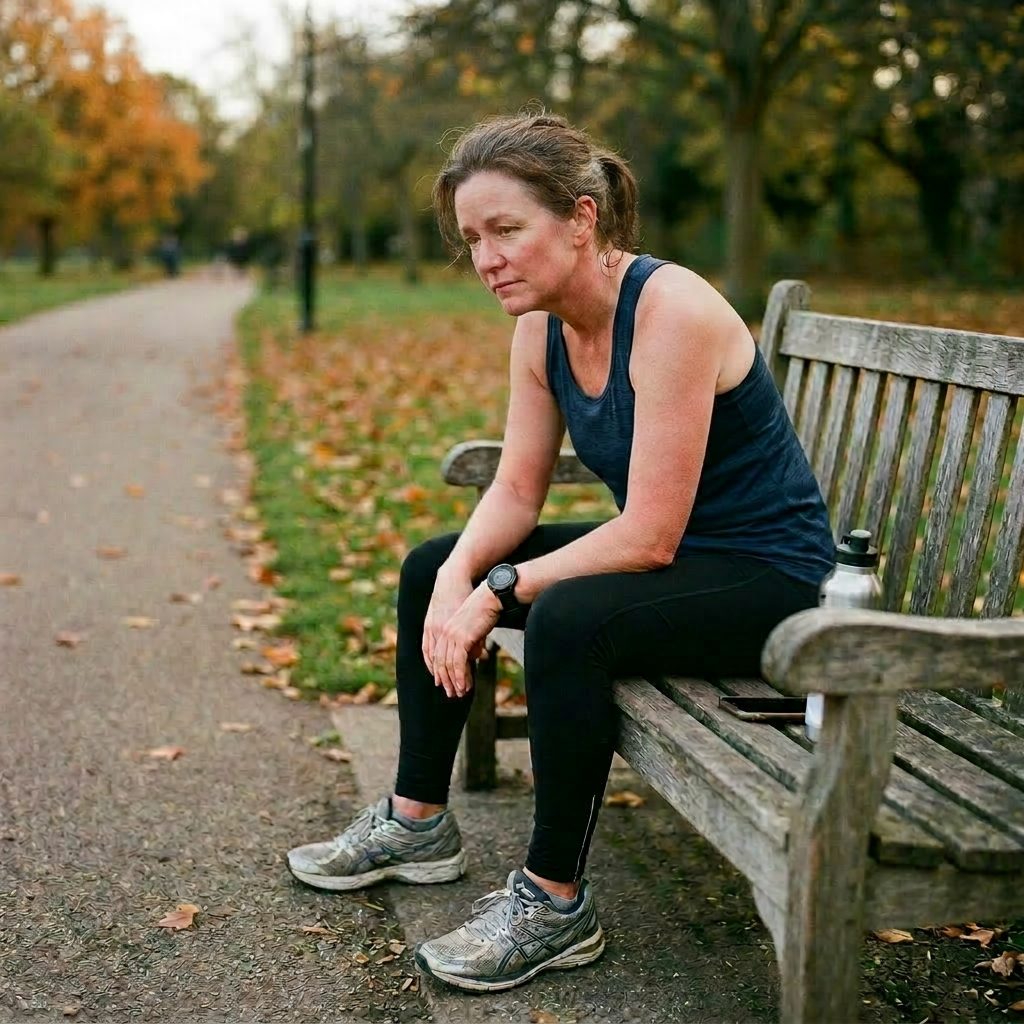
The morning started out like many Saturdays. After an early wake-up and a carb-loaded breakfast, I collected gels and chews, made sure my headphones were charged, and headed out for my long run. At first nothing seemed unusual, although I could tell my legs and lungs needed to warm up before settling into a rhythm. But after the first mile or so I realized nothing was clicking. My breathing felt a half-step behind, like I couldn’t pull in enough air to match my pace. My legs carried a heaviness that made every incline seem twice as steep. Even the flat stretches felt difficult, as if the road were subtly tilting against me. I kept waiting for that familiar shift into autopilot—the steady cadence, the quiet mind—but it never came. Instead, each mile demanded focus and persistence, turning what should have been a comfortable endurance effort into a mental battle that left me more fatigued than the distance should have.
Does this sound familiar? If you’re over 40 and feel like your training isn’t going the way it used to – you’re not imagining it. But this doesn’t mean you’re out of shape and it doesn’t mean you can’t perform. It just means it’s time for some adjustments.
What Happens During Perimenopause
Hormones Change
After 40 our hormones start to fluctuate as we reach perimenopause. This can affect muscle recovery, tendon and ligament elasticity, sleep quality, and thermoregulation which all affect our running ability.
Estrogen is a key hormone for muscle repair and regeneration because it supports muscle protein synthesis and collagen production. It also helps reduce post-exercise damage. As it begins to fluctuate, and eventually decline, slower recovery, increased soreness, and even muscle loss may start to occur.
Progesterone fluctuates then significantly declines during perimenopause. This hormone plays a role in sleep, tissue integrity, collagen production, and mood. As it decreases some women notice increased anxiety, poor sleep quality, and longer recovery due to weakening joints and tendons.
Testosterone steadily decreases with age, typically starting before perimenopause but with the most substantial drops occurring after 40. This decline can contribute to reduced lean muscle mass, increased fat, decreased competitive drive, and performance decline.
Cortisol sensitivity increases as estrogen and progesterone (which normally regulate it) decrease. This results in cortisol spikes that might cause fatigue, slower recovery from stress, poor lean muscle retention, visceral fat gain, and sleep disturbances.
Muscle Mass and Strength Change
Around age 30 our bodies subtly start to experience progressive age-related loss of muscle mass, strength, and function. Known as sarcopenia, this loss accelerates after 40 due to dropping estrogen and testosterone. As it occurs, runners may notice reduced power, slower paces, increased fatigue, longer recovery, and even increased injuries.
Recovery Needs Change
Once perimenopause starts, females need more protein to counteract the effects of declining estrogen. Increased protein helps maintain lean muscle, supports bone health, boosts metabolism, and improves satiety for women trying to lose or manage their weight.
Sleep needs also change over 40. Decreased estrogen results in less serotonin and melatonin making it harder to fall asleep and stay asleep. Decreased progesterone, which has a natural sedative and calming effect, can lead to insomnia and less restful sleep. Hot flashes and night sweats can cause frequent awakenings, and high cortisol can lead to anxiety, exhaustion, and low-quality sleep. While we are sleeping our bodies release growth hormone and repair tissues, so when sleep quality decreases so does the repair of our tendons, ligaments, and muscles. This means in order to maintain strength and running ability, middle aged women actually need to increase their hours of sleep.
Rest days become more important as women age. As changes in hormones occur that make recovery slower, more rest days are required to maintain performance. This doesn’t mean you shouldn’t stay active, but intentional time off from running gives our bodies the time needed to repair muscle fibers and regain strength.
What you can do to offset these changes
Resistance Training: Lift Heavy 2-3 times/week
Resistance and strength training preserves muscle mass and bone density. Focus on increasing weight over increasing reps, and don’t forget to include core work.
Protein fuels muscle repair and recovery. Active perimenopausal women engaging in regular running and resistance training should aim for 1.4-2.2 g/kg (roughly 1 gram per pound of body weight) daily.
Prioritize Sleep
Your body repairs itself during sleep. Poor sleep raises cortisol, slows recovery, and hurts performance.
Monitor Iron Levels
Heavy menstrual bleeding that often occurs during perimenopause can sometimes lead to iron deficiency anemia which can cause fatigue and poor endurance. Regular blood work helps catch and correct deficiencies early.
Fuel Before Runs
A carb-rich snack before running keeps energy up, protects muscle, and improves performance.
Incorporate Active Rest Days
Light movement like walking or yoga on off-days reduces soreness and keeps you mobile without added stress.
Talk To Your Healthcare Provider About Supplements
Certain supplements such as creatine, magnesium glycinate, and ashwagandha are often mentioned as beneficial during perimenopause, but talk to your personal provider about what is safe for you to take before trying anything new.
Consider Hormone Replacement Therapy (HRT)
While it may not be right for everyone, HRT can restore hormone levels to improve energy, sleep, mood, bone density, and athletic performance.
The journey through perimenopause looks different for every runner, but one thing is certain — slowing down doesn’t have to be inevitable. Small, intentional changes to how you train, fuel, recover, and sleep can make a tremendous difference in how you feel on every run. Be patient with yourself as you experiment with what works best for your body, and remember that adapting your approach isn’t a step backward — it’s what smart, experienced athletes do.
Each of the recommendations above deserves a deeper look, and that’s exactly what’s coming. Going forward, this blog will dive into each topic individually — from the science of strength training for perimenopausal runners, to practical guidance on protein intake, sleep strategies, HRT, and more. Bookmark this page, subscribe for updates, and come back often. Your best miles are still ahead of you.
Note: While I am a nurse practitioner and a personal trainer, I am not your nurse practitioner or trainer. Always consult with your own medical provider regarding what is right for you.
References
Collins BC, Laakkonen EK, Lowe DA. Aging of the musculoskeletal system: How the loss of estrogen impacts muscle strength. Bone. 2019 Jun;123:137-144. doi: 10.1016/j.bone.2019.03.033. Epub 2019 Mar 28. PMID: 30930293; PMCID: PMC6491229.
Hamilton HM, Yarish NM, Heron KE. Frequency and perceived influence of menopausal symptoms on training and performance in female endurance athletes. PLoS One. 2025 Dec 17;20(12):e0335738. doi: 10.1371/journal.pone.0335738. PMID: 41406071; PMCID: PMC12711079.
McNulty KL, Murphy M, Flynn E, Lane A, Muldoon A, Kealy R, Harrison M, Windle J, Heavey P. The Effectiveness of Lifestyle Interventions, Including Exercise, Diet, and Health Education on Symptoms Experienced During Perimenopause: A Systematic Review of Randomized Controlled Trials. J Aging Phys Act. 2025 Sep 23:1-24. doi: 10.1123/japa.2024-0226. Epub ahead of print. PMID: 40992413.
Leave a Reply