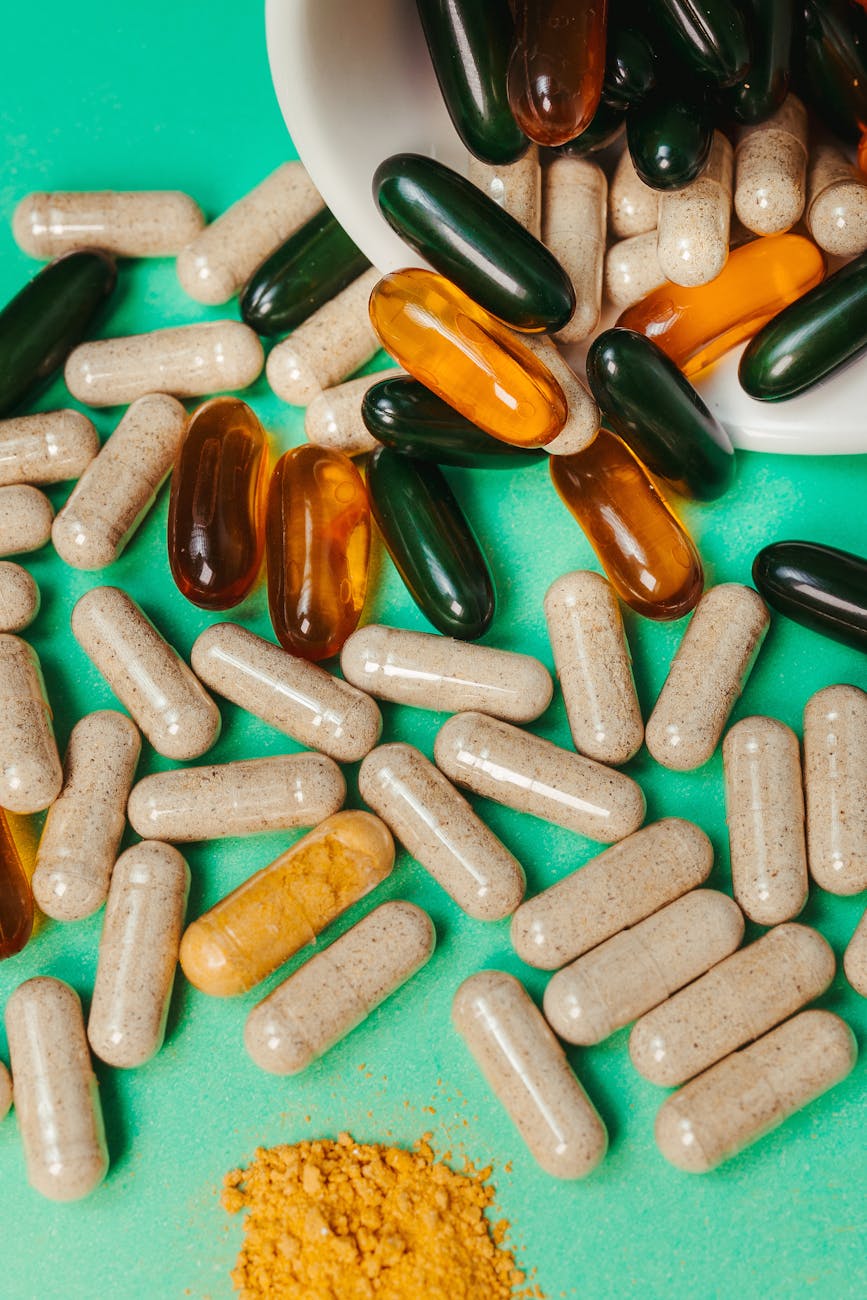
The hormone fluctuations of perimenopause can affect recovery, bone health, sleep, energy, and muscle mass — all things that are important for runners. The supplement industry targets women aggressively in this phase of life, and it can be difficult to know what works and what doesn’t. Here’s a quick rundown of what’s worth spending your money on and what you can skip.
Supplements with Strong Evidence of Helping Perimenopausal Runners
Creatine
Creatine has been widely studied and evidence shows it can preserve muscle mass, bone health, and cognitive function in perimenopausal women. The recommended dose is 3–5 g of creatine monohydrate daily. It works best when paired with weight-bearing or resistance training.

You can read more about the benefits of creatine here!
Iron
Fluctuating hormones can cause heavy menstrual bleeding, which can lead to iron loss and anemia. Decreasing estrogen can also cause inflammation leading to decreased iron absorption. Symptoms of low iron include fatigue, brain fog, and trouble sleeping — which can all affect your running ability. Iron is best absorbed on an empty stomach and taken with vitamin C (like a glass of orange juice) and shouldn’t be taken with calcium or dairy. Ask your doctor for blood tests to find out if your iron is low before starting iron supplements — not everyone needs them!

More details can be found on this webpage.
Calcium + Vitamin D
Calcium is crucial for bone health, and vitamin D is the key to absorption, so they are best when taken together. Dietary sources are best, so focus on dairy, beans, dark leafy veggies, and fatty fish. Vitamin D is also obtained through sun exposure! If you have concerns about not getting enough through diet alone, talk with your doctor or nutritionist to find out if adding a supplement might help you.

If you want to learn more about calcium and vitamin D, this is a good resource.
Magnesium Glycinate
Studies show that magnesium glycinate can be extremely beneficial in perimenopause. It provides relief from common symptoms like anxiety, insomnia, and muscle cramps (all of which negatively affect running). It is also one of the most easily absorbed forms of magnesium and gentle on the stomach. Starting dose is 100–200 mg daily, and taking it at bedtime maximizes its benefits.

If you’d like more information click on this link.
Omega-3’s
Omega-3 fatty acids decrease inflammation, support bone and joint health, lower cardiovascular risks, and promote lean muscle. They are also linked to better sleep quality.
Want to know more?

Protein
Protein provides muscles the essential building blocks needed to recover after a run. Protein from food is best, but a supplement (like a shake or a bar) is an easy way to make sure the body gets what it needs if you are struggling to get enough protein in your diet.
Learn more here.

Supplements that MAY Help Perimenopausal Runners
Collagen Peptides
Studies show that collagen peptides — especially when combined with calcium and vitamin D — show promise for improving bone and muscle health. They may also reduce joint stiffness in osteoarthritis.
Learn more here.

Ashwagandha
In addition to lowering cortisol and easing common perimenopause symptoms like poor sleep, brain fog, anxiety, and hot flashes, Ashwagandha shows promise for athletic performance, including improved VO₂max, endurance, and recovery.
Learn more here.

Maca Root
Lab studies suggest maca may assist not only physically active people and athletes, but also women complaining of lack of energy and stamina during perimenopause. Unlike caffeine, maca offers a sustained energy boost without the crash and may boost endurance and improve recovery.
Learn more here.

Supplements with Little Evidence of Helping Perimenopausal Runners (Save Your Money!)
Many supplements marketed toward middle-aged women claim to relieve the symptoms of perimenopause and some also claim to boost athletic performance. The following are common, but there is currently little to no evidence they are beneficial:
Dong Quai
Claims to reduce hot flashes, night sweats, menstrual cramps, PMS, and supports “hormonal balance”.
Milk Thistle
Claims to provide liver support, hormone detoxification, estrogen metabolism.
Black Cohosh
Claims to reduce hot flashes, night sweats, sleep disturbances, and mood changes.
Evening Primrose
Claims to reduce inflammation, hot flashes, breast tenderness, mood swings, skin health, and “provide hormonal balance”.
Wild Yam
Claims to be a natural progesterone precursor, providing “hormone balance” and bone health protection.
Red Clover & Soy
Claims to provide hot flash relief, bone density support, cardiovascular health, cholesterol improvement, and cognitive benefits.
The Bottom Line
Supplements won’t fix the transition, but the right ones can support you through it. Start simple, talk to your doctor, and tune out the noise from products promising hormonal miracles (save that money for your shoes!).
Note: While I am a nurse practitioner and a personal trainer, I am not your nurse practitioner or trainer. Always consult with your own medical provider regarding what is right for you.
References
Acharya Balkrishna, Ankita Kukreti, Nidhi Sharma, Deepika Srivastava, Vedpriya Arya,
Efficacy and safety of Withania somnifera (Ashwagandha) in the management of menopausal symptoms, Pharmacological Research – Natural Products,Volume 10,2026,100478,ISSN 2950-1997
Candow DG, Moriarty T. Effects of Creatine Monohydrate Supplementation on Muscle, Bone and Brain- Hope or Hype for Older Adults? Curr Osteoporos Rep. 2024 Nov 1;23(1):1. doi: 10.1007/s11914-024-00895-x. PMID: 39509039.
Salamon, Maureen. 2024. “Menopause Supplements: Effective Relief or Empty Promises?” Harvard Health Publishing, September 1, 2024. https://www.health.harvard.edu/womens-health/menopause-supplements-effective-relief-or-empty-promises.
Sims ST, Kerksick CM, Smith-Ryan AE, Janse de Jonge XAK, Hirsch KR, Arent SM, Hewlings SJ, Kleiner SM, Bustillo E, Tartar JL, Starratt VG, Kreider RB, Greenwalt C, Rentería LI, Ormsbee MJ, VanDusseldorp TA, Campbell BI, Kalman DS, Antonio J. International society of sports nutrition position stand: nutritional concerns of the female athlete. J Int Soc Sports Nutr. 2023 Dec;20(1):2204066. doi: 10.1080/15502783.2023.2204066. PMID: 37221858; PMCID: PMC10210857.
Sun C, Yang A, Teng F and Xia Y (2025) Efficacy of collagen peptide supplementation on bone and muscle health: a meta-analysis. Front. Nutr. 12:1646090. doi: 10.3389/fnut.2025.1646090
Ulloa Del Carpio N, Alvarado-Corella D, Quiñones-Laveriano DM, Araya-Sibaja A, Vega-Baudrit J, Monagas-Juan M, Navarro-Hoyos M, Villar-López M. Exploring the chemical and pharmacological variability of Lepidium meyenii: a comprehensive review of the effects of maca. Front Pharmacol. 2024 Feb 19;15:1360422. doi: 10.3389/fphar.2024.1360422. PMID: 38440178; PMCID: PMC10910417.